Le Mans Bugatti
Le Mans Bugatti Notas:
Il 24 Ore di Le Mans è l'evento di gara di resistenza per eccellenza, una delle competizioni più importanti nel Motorsport, tenuta ogni anno dal 1929 (con una pausa di 10 anni dal 1939 al 1949) presso il Circuit de la Sarthe a Le Mans, in Francia. Per avere successo a Le Mans, una vettura da corsa deve sviluppare velocità più elevate e, allo stesso tempo, avere un'eccezionale affidabilità in condizioni di gara a lunga distanza. Il vincitore è il team che copre la maggior distanza in 24 ore. La gara si svolge in estate, con una temperatura elevata e occasionali piogge che bagnano la superficie del circuito.
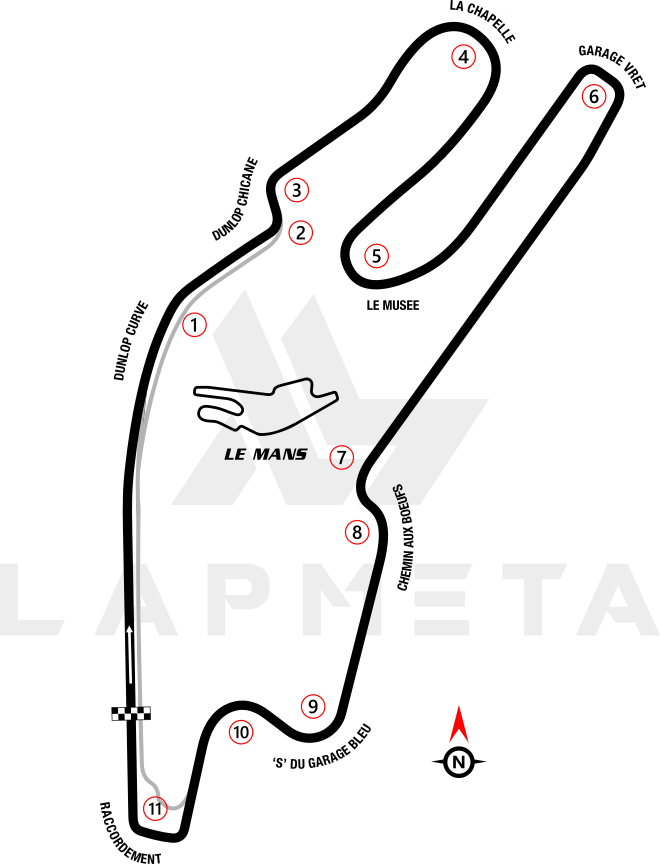
Il circuito di 2,6 miglia e 11 curve del Circuit de la Sarthe nella sua configurazione attuale è un layout altamente tecnico che offre una vasta gamma di caratteristiche che mantengono i piloti professionisti impegnati per tutto il tempo in cui sono al volante. Per ottenere una velocità media di 79 mph (127 km/h) su questo circuito difficile da manovrare, è necessario un pilota completamente concentrato ed esperto, per non parlare delle particolarità di completare le difficili 24 ore di gara continua. Le squadre sostituiscono i piloti ogni 1-2 ore, ma l'intervallo preciso dipende dalla strategia della squadra. L'intera traiettoria è spettacolare alla vista e divertente da guidare, con un tipo diverso di sfida ad ogni curva, molte opportunità di sorpasso e un'esperienza coinvolgente che ogni appassionato di motorsport deve provare.
Bugatti Notas:
Circuit de la Sarthe's Bugatti configuration delivers 4.185 kilometers of permanent road course racing through 11 turns, constructed in 1965 within the 24 Hours of Le Mans facility and named after Ettore Bugatti to provide a standalone circuit for events beyond the annual endurance classic. This clockwise layout incorporates iconic Le Mans sections including the main pit straight, Ford Chicane, and Dunlop bridge area before diverging through a tight hairpin section running parallel to the 24 Hours circuit back toward the paddock village, creating a compact technical challenge contrasting the 13.626-kilometer full Le Mans layout's high-speed character. The Bugatti Circuit's 2.6-mile distance with 11-meter elevation gain emphasizes tight corners and technical precision over sustained 300+ kph speeds, making it suitable for MotoGP motorcycle racing, club events, and series requiring shorter lap times than the full 24 Hours configuration permits.
The Bugatti Circuit's character emerges from sharing legendary Le Mans sections while maintaining independent compact layout. The Ford Chicane at lap end, pit complex, and Dunlop bridge straight connect Bugatti to 24 Hours mythology, but the tight hairpin section behind the pits creates entirely different rhythm from the full circuit's Mulsanne Straight and high-speed Porsche Curves. The famous Dunlop Chicane provides one of Bugatti's signature challenges—heavy braking into tight direction changes testing brake-turn precision. The circuit hosted Formula 1's 1967 French Grand Prix demonstrating versatility for different series, though modern use focuses on MotoGP (hosting French Grand Prix motorcycle racing), national series, and club events. Western France's temperate maritime climate creates moderate seasonal variation with frequent rain affecting grip levels on tight corners where water accumulation punishes early throttle application. The Bugatti Circuit's permanent infrastructure within the 24 Hours facility provides world-class paddock and spectator amenities uncommon at standalone club circuits. The configuration particularly serves as accessible alternative to the full Le Mans layout, where 4.185-kilometer laps and 11-turn technical character suit motorcycle racing and events requiring more laps per session than the 13.626-kilometer 24 Hours circuit allows, preserving Le Mans atmosphere while offering practical compact racing unavailable on the legendary endurance configuration.

| Nome | Organização | Data |
|---|


