Dubai Autodrome International Circuit GP Circuit
Dubai Autodrome International Circuit GP Circuit Notas:
El Circuito Internacional del Autódromo de Dubai es una pista de carreras de 5,37 km dentro de uno de los mayores complejos de ocio del mundo: Dubailand, en Dubai, Emiratos Árabes Unidos. El autódromo cuenta con cuatro configuraciones diferentes para las carreras, dos de ellas con licencias de grado 1 de la FIA y un kartódromo para las competiciones de karts. Las Asian Le Mans Series y el Campeonato Asiático de Fórmula Regional son dos de los eventos automovilísticos regulares que se celebran en el Autódromo de Dubai. En Dubai sólo hay dos estaciones: el verano, supercaluroso y sin lluvia, y el invierno, suave y con chaparrones ocasionales. El calor y la humedad insoportables del verano desértico hacen que las carreras nocturnas sean la mejor opción durante esa temporada.
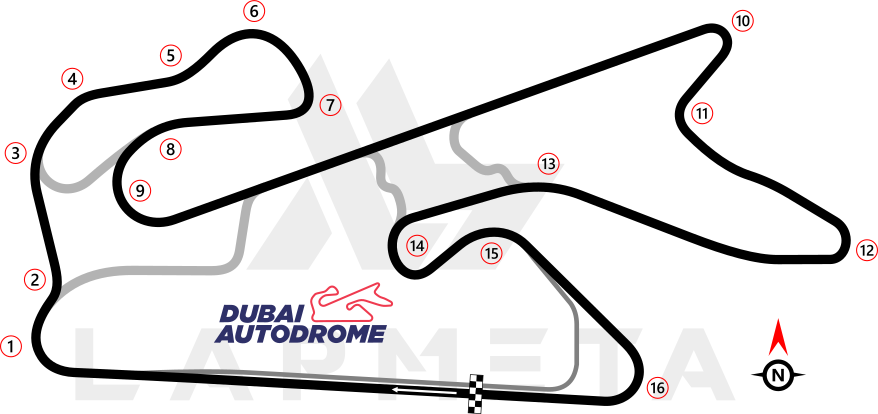
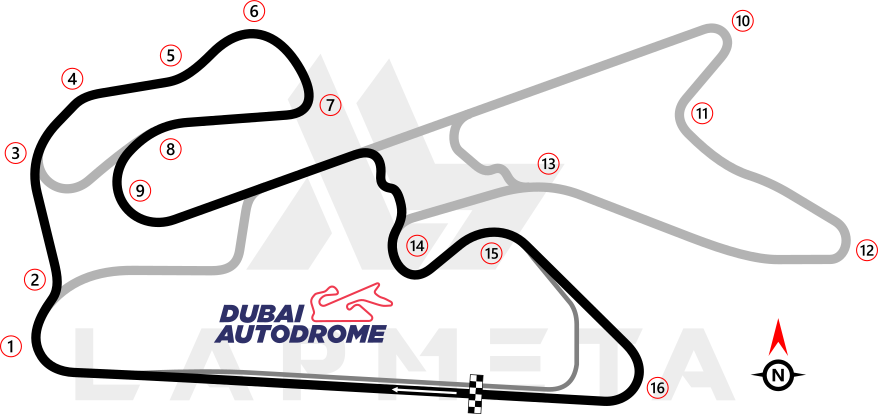
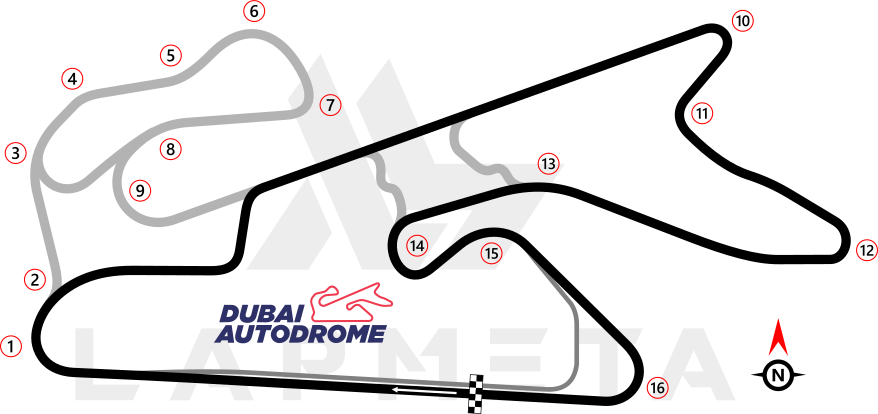
La trayectoria del trazado del Gran Premio en el Circuito Internacional del Autódromo de Dubai discurre por 16 curvas rodeadas de amplias escorrentías de asfalto que aumentan la seguridad del circuito. Las carreras comienzan y terminan en la recta delantera del autódromo, donde los mejores coches de carreras pueden alcanzar los 200 km/h (124 mph). La primera curva es una curva rápida a la derecha, seguida de una ligera curva a la izquierda en la segunda curva. El trazado serpentea de la tercera a la sexta curva, lo que lleva a los pilotos a reducir la marcha en la entrada de la séptima curva. Un par de curvas a la izquierda llevan a los pilotos a la recta de atrás y, desde allí, a las seis curvas restantes que suponen un reto. Las curvas diez a doce son muy cerradas y requieren una fuerte dirección para evitar los bordillos, y la curva 13, de gran amplitud, hace que los pilotos vuelen a 190 km/h (118 mph). La curva 14, en subida, tiene el radio más corto del Autódromo de Dubai, y después los corredores bajan por la 15 y la 16 para volver a entrar en la recta delantera con la línea de meta a la vista.
GP Circuit Notas:
Dubai Autodrome's Grand Prix Circuit represents the United Arab Emirates' premier FIA Grade 1 racing facility, stretching 5.390 kilometers (3.349 miles) through 16 turns across the Dubai Motor City development in the desert outskirts of Dubai. Designed by Clive Bowen of Apex Circuit Design and opened in October 2004, the GP Circuit was pioneering as the first FIA-sanctioned facility to incorporate wide asphalt run-off areas throughout the entire layout, setting a safety standard that would become the norm in modern circuit design. The full GP configuration combines high-speed straights—where GP2 Asia cars have reached speeds enabling a 1:41.220 track record set by Kamui Kobayashi—with technical sections featuring hairpins, chicanes, and sweeping curves that test both aerodynamic efficiency and mechanical grip.
What distinguishes the Dubai Autodrome GP Circuit is its location in one of the world's most extreme racing climates, where ambient temperatures routinely exceed 45°C during summer months and track surface temperatures can surpass 70°C, creating tire degradation challenges unmatched anywhere in global motorsport. The circuit's FIA Grade 1 license confirms it meets all requirements to host Formula One, though it primarily serves GT championships, touring car series, and the region's growing motorsport community rather than F1's calendar. The wide asphalt runoff areas—revolutionary when constructed in 2004—provide safety margins while removing the gravel-trap penalties that define European circuits, creating a different risk-reward calculation where track limit violations cost time rather than race-ending beaching. Air-conditioned pit facilities and climate-controlled paddock areas reflect the necessity of supporting motorsport in desert conditions, while the facility's location within Dubai Motor City positions it as both a competitive venue and commercial motorsport complex serving the Middle East's expanding racing culture.

| nombre | Organización | Fecha |
|---|


