Suzuka Circuit
Suzuka Circuit Notes:
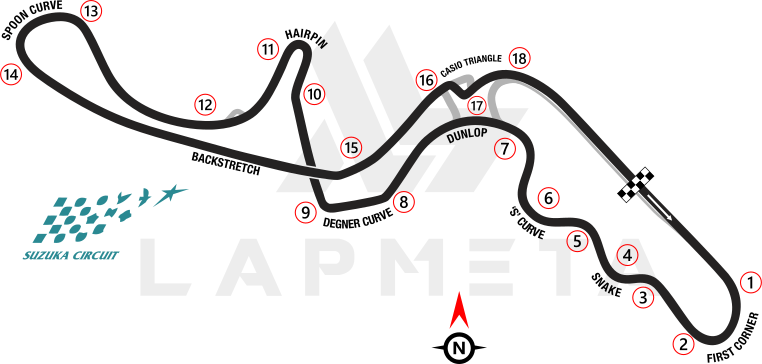
Suzuka Circuit represents one of motorsport's most legendary and technically demanding facilities, located in Suzuka City, Mie Prefecture, Japan, originally conceived and constructed by Honda Motor Company as a private test facility before evolving into one of the world's most celebrated racing venues hosting Formula 1, motorcycle endurance racing, and diverse national motorsport competitions. Development began in 1962 with Honda founder Soichiro Honda commissioning Dutch designer John Hugenholtz—architect of Zandvoort—to create a world-class circuit for vehicle development and racing, resulting in the iconic 5.807-kilometer figure-eight layout that remains virtually unchanged from its original configuration, representing one of few circuits to maintain its classic character across six decades of motorsport evolution. The figure-eight design, unique among major international racing circuits, features the track crossing over itself via a bridge after the Dunlop Curve, creating a continuous flowing layout without the conventional 'two halves' character of typical circuits where the front and back sections feel distinctly separated. Suzuka's corner sequence tests every aspect of vehicle dynamics and driver skill, from the flat-out sweeping 130R that demands absolute commitment and precision, through the technical Spoon Curve requiring perfect entry speed and patience on throttle application, to the iconic Casio Triangle chicane leading onto the front straight where countless overtaking maneuvers and defensive battles have decided race outcomes throughout the circuit's history. The track gained Formula 1 championship status in 1987, hosting the Japanese Grand Prix almost continuously since (with brief interruptions when F1 visited Fuji Speedway), and becoming famous for title-deciding races including Ayrton Senna's controversial collisions with Alain Prost in 1989-1990 that remain among the sport's most debated moments. Beyond Formula 1, Suzuka achieved legendary status in motorcycle endurance racing, hosting the prestigious Suzuka 8 Hours since 1978—an event that began as a 10-hour TT-F1 race in the 1960s before adopting its current 8-hour format and transitioning to Superbike regulations in 1993, attracting factory teams and star riders who consider Suzuka 8 Hours among motorcycling's most important victories alongside Isle of Man TT and prestigious Grand Prix wins.
| Name | Organization | Date |
|---|


