Korea International Circuit-Yeongam National Circuit
Korea International Circuit-Yeongam National Circuit Notes:
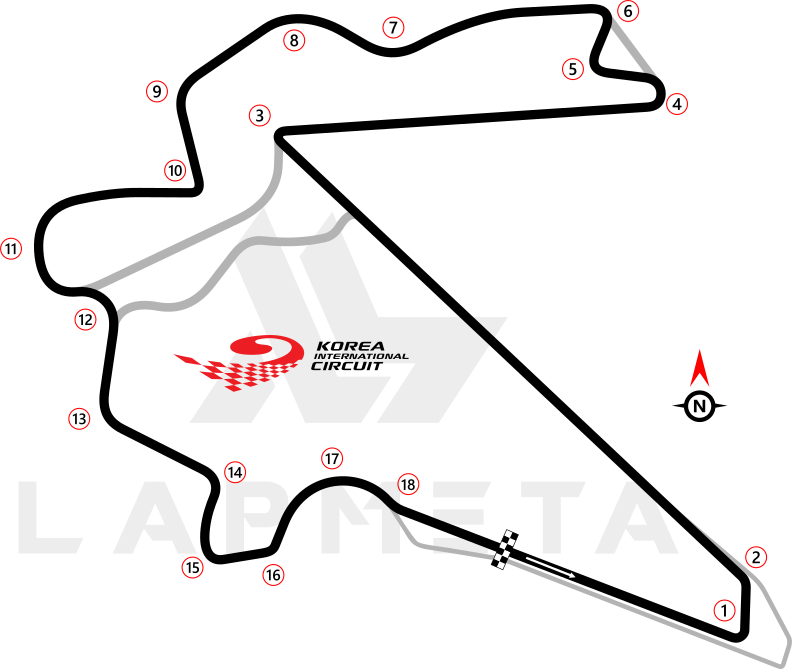
The Korea International Circuit is a 3.49-mile (5.61-km) racing facility designed by the famous German track architect Hermann Tilke and paved in Yeongam, South Korea, along the shore of the Yellow Sea. The FIA Grade 1 Korea International Circuit hosted the Formula 1 Korean Grand Prix four times, from 2010 to 2013, and regularly hosts GT1 World Championship and GT Asia Series competitions. The design of the circuit allows spectators from the beach and adjacent hotels to see the races, and the pit lanes go through a part of the street public roads. There are four distinct seasons in Yeongam, with lots of rainfall, especially in summer.
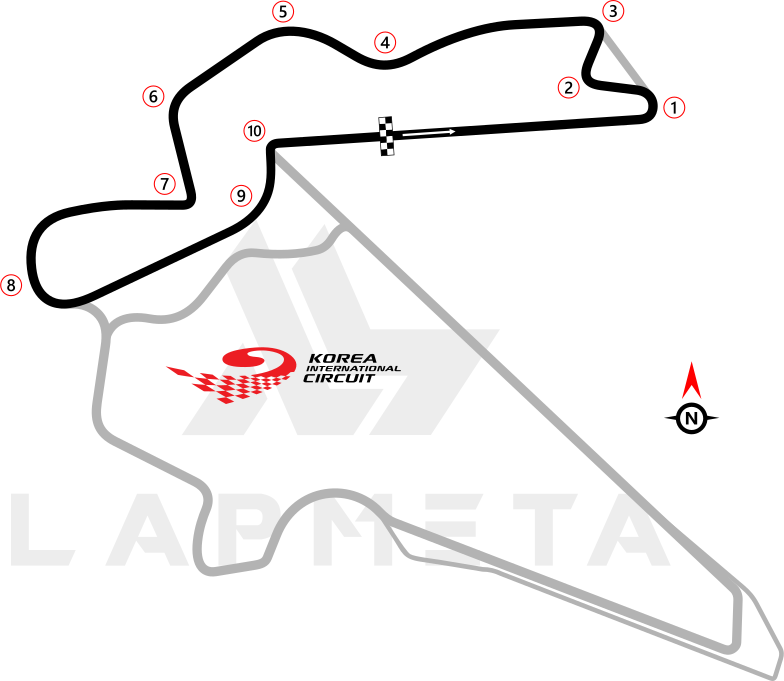
The Korea International Circuit has two possible configurations for racing, both of them running in the counterclockwise direction. The Grand Prix Course includes the whole 3.49-mile (5.61-km) trajectory of the race track. Local motorsport events use the shorter National Circuit, which only covers the northern part of the track. Some of the most remarkable features of the raceway include its 1.16-km (0.72-mile) long back straightaway, its sharp multi-apex turn number three, and the highly technical sneaking stretch from turn six into turn eighteen. The average speed is 81 mph (130 km/h), with a top speed of 149 mph (240 km/h).
National Circuit Notes:
The National Circuit configuration at Korea International Circuit in Yeongam delivers a mid-length layout between compact club circuits and the full 5.615-kilometer Grand Prix configuration at this facility that hosted Formula One from 2010-2013. The National designation serves Korean domestic championships requiring professional infrastructure without the intimidating distance of the full GP layout that achieved brief international prominence. This configuration bridges accessibility with legitimate championship challenge.
Operating the National configuration showcases Korea International Circuit's versatility in serving varied skill levels beyond its short-lived Formula One hosting period. The National layout provides appropriate challenge for Korean domestic racing series while maintaining FIA safety standards and comprehensive infrastructure. Korean climate creates distinct seasonal racing windows with the facility located in South Jeolla Province. The National circuit serves as the facility's intermediate option, allowing Korea International Circuit to accommodate varied event types from club racing to national championships at this modern Korean motorsport venue.
| Name | Organization | Date |
|---|


