Autódromo Velo Città CCW
Autódromo Velo Città CCW Note:
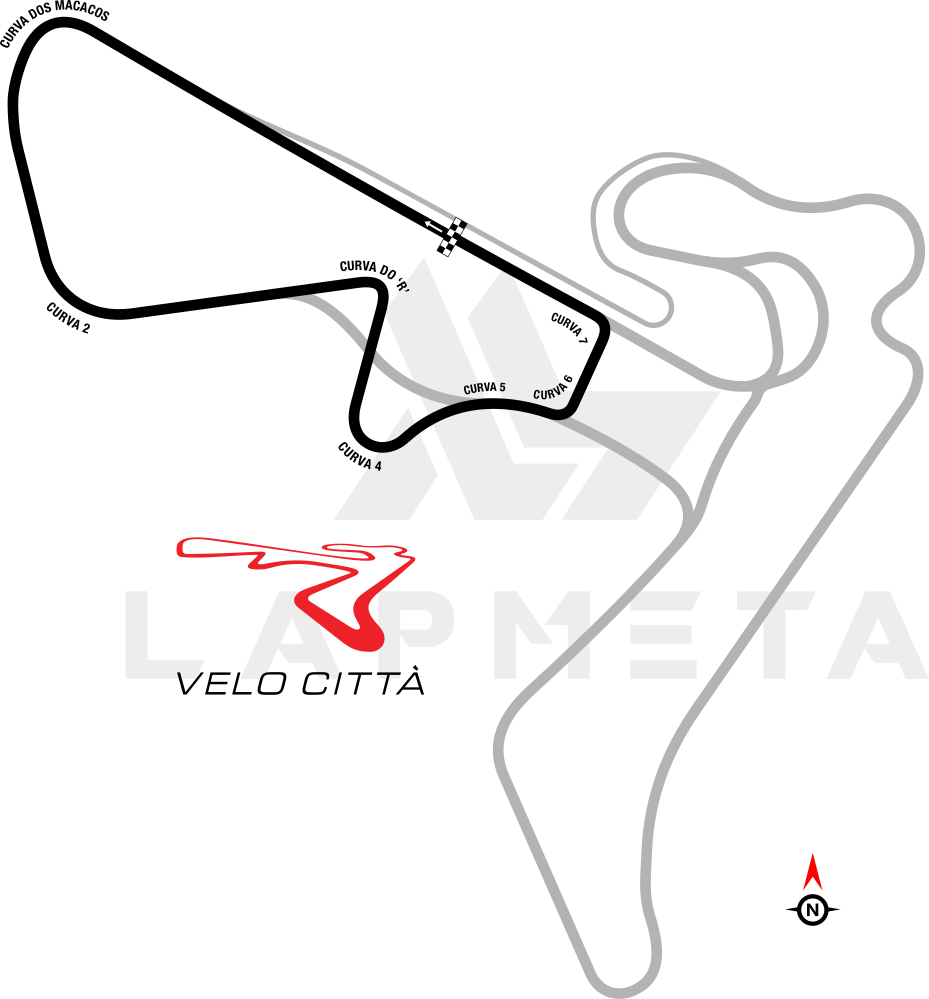
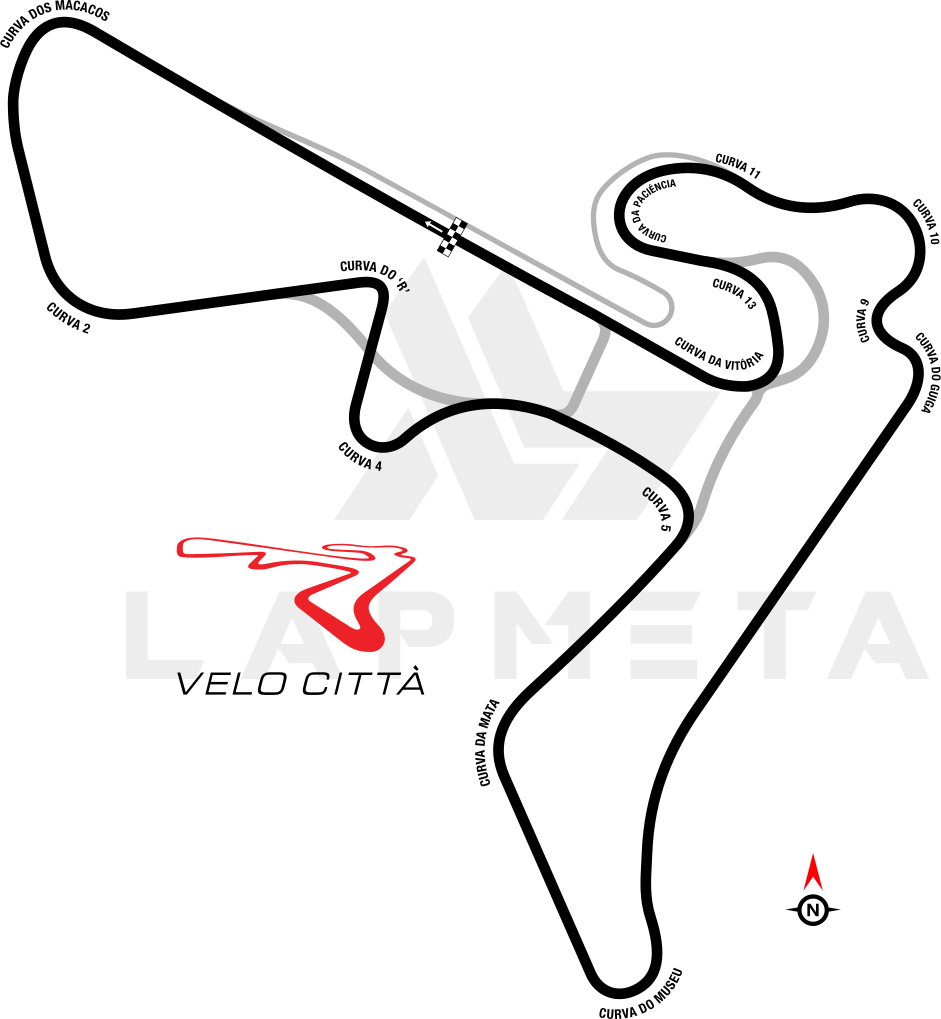
Autódromo Velo Città is a motor racing circuit located on private property in the municipality of Mogi Guaçu, São Paulo, Brazil, approximately 180 kilometers (110 miles) north of the state capital São Paulo. The circuit opened in 2012, making it one of the more recent race tracks in Brazil. According to the circuit's official website, they offer two main layouts: the original layout measuring 3.493 kilometers with 14 curves, and the competition layout measuring 3.443 kilometers (2.139 miles) with 12 curves. Both configurations are homologated by FIA and CBA (Brazilian Automobile Confederation).
The circuit features a mix of high, medium, and low-speed corners on climbs and descents, with a 45-meter (148-foot) difference in height between the highest and lowest points. The track includes 15 signaling posts and 8 pit boxes. It is not characterized as a high-speed track, instead featuring many medium and low-speed curves that emphasize technical driving. In August 2017, the circuit hosted its first race of Stock Car, the largest category in Brazilian motorsport. Today, the highlights of the racing season include two rounds of the Stock Car Pro Series, in addition to hosting Stock Light and Formula 4 Brazil championships. Velo Città has established itself as an important modern motorsport facility in the São Paulo region.
CCW Note:
The counterclockwise configuration at Autódromo Velo Città reverses the Brazilian circuit's 3.493-kilometer (2.17-mile) layout in Mogi Guaçu, São Paulo, transforming how drivers approach the 14 turns carved through terrain featuring a dramatic 45-meter (148-foot) elevation difference between highest and lowest points. Running CCW completely alters the experience of this FIA and CBA (Brazilian Automobile Confederation) homologated facility located 180 kilometers north of São Paulo, where the standard clockwise flow has established the circuit's reputation for technical medium and low-speed corners rather than high-speed straights. The reversed direction creates unfamiliar brake reference points and apex sighting challenges across corners designed to emphasize chassis balance and driver precision on climbs and descents that define Velo Città's character.
Operating counterclockwise proves particularly valuable at Velo Città given the circuit's emphasis on elevation-dependent corners where gradient affects braking performance and acceleration differently when approached from reversed angles. The facility's competition layout measuring 3.443 kilometers (2.139 miles) with 12 curves offers a slightly different configuration from the 14-curve full layout, with both variants benefiting from bidirectional operation that maximizes track utilization during multi-group events. Brazilian motorsport legend Rubens Barrichello has set fast times here in a Porsche 991.2 GT2 RS, establishing benchmarks in both directions. São Paulo state's tropical highland climate creates distinct seasonal conditions—summer afternoon thunderstorms can dramatically change grip levels mid-session, while winter months (June-August) offer cooler morning temperatures that reward different setup approaches when attacking the circuit's technical corners from the counterclockwise direction. The CCW configuration allows Brazilian track day participants and racing schools to experience familiar sections from entirely new perspectives, reinforcing Velo Città's versatility as one of Brazil's premier modern racing facilities.
| Nome | Organizzazione | Data |
|---|


