Sochi Autodrom CW
Sochi Autodrom CW Notas:
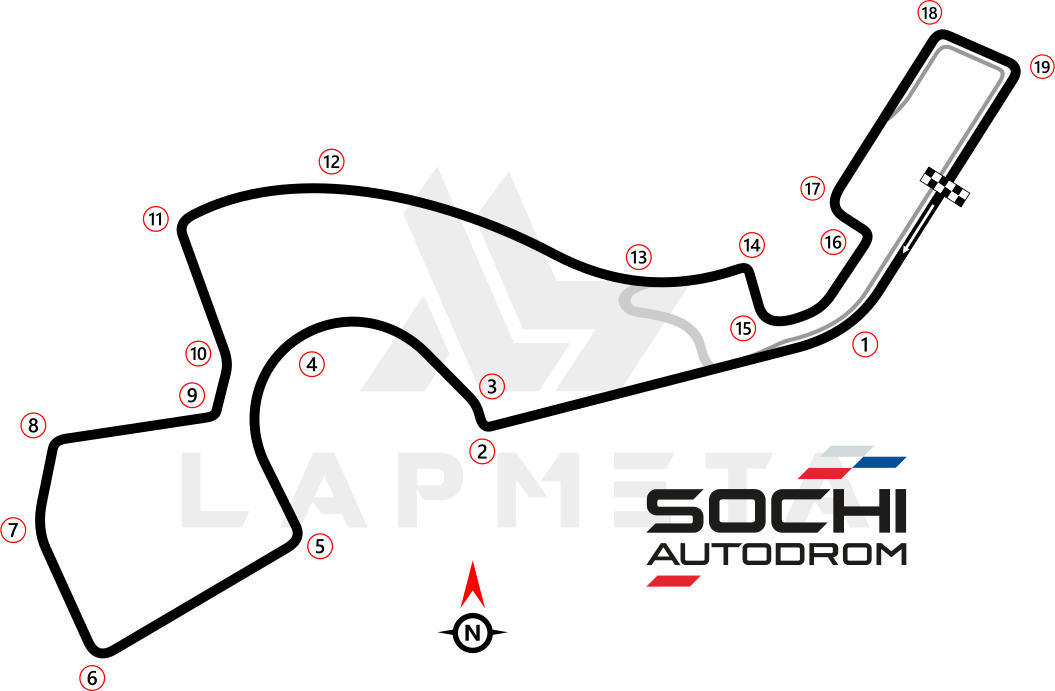
El Autódromo de Sochi es una pista de carreras de 5,84 km construida alrededor del Parque Olímpico de Sochi, donde se celebraron los Juegos Olímpicos de Invierno de 2014, en Sirio, a lo largo de la costa del Mar Negro, en el sur de Rusia. El arquitecto encargado del diseño del circuito de carretera fue el mundialmente famoso Hermann Tilke, que también trabajó en circuitos de Fórmula 1 como el Red Bull Ring, el Circuito de las Américas o el Marina Bay, por nombrar algunos. El Sochi Autodrom es la sede del Gran Premio de Rusia de Fórmula 1 desde 2014 y es una categoría única en su género porque es un circuito urbano permanente que evolucionó a partir de las carreteras interiores de la ciudad olímpica.
La ubicación meridional de Sochi hace que la ciudad pueda presumir de tener el clima más cálido de Rusia, con temperaturas medias cercanas a los 20 °C (68 °F), inviernos frescos y veranos cálidos. La superficie de la pista tiende a estar húmeda todo el año, y hay nevadas en el circuito durante el mes de enero. El Autódromo de Sochi cuenta con 19 curvas, con un trazado difícil de manejar y un buen equilibrio entre curvas cerradas y barredoras. Algunas señas de identidad del circuito son sus 750 metros, la curva número cuatro en forma de omega, o la combinación de curvas rápidas de barrido de las curvas 12 y 13, en las que los corredores se precipitan a 240 km/h (150 mph).
CW Notas:
The clockwise configuration at Sochi Autodrom (renamed Sirius Autodrom in April 2024) represents Russia's first purpose-built Formula One facility, delivering 5.848 kilometers of Hermann Tilke-designed asphalt featuring 19 corners (12 right-handers, 7 left-handers) through the Olympic Park complex along Russia's Black Sea coast in Krasnodar Krai. Running clockwise from the start grid on the northern edge of the Olympic Park next to the railway station, the circuit's 13-15 meter width provides multiple racing lines through sections that hosted the World Championship Russian Grand Prix from 2014 to 2021. The clockwise flow emphasized Tilke's characteristic blend of tight technical complexes and medium-speed corners designed to create overtaking opportunities, though critics often noted the circuit's processional racing character compared to classic European venues.
What distinguished Sochi Autodrom's clockwise layout was its integration with 2014 Winter Olympics infrastructure, creating a unique street-circuit-meets-permanent-facility hybrid where grandstands and Olympic venues provided spectator amenities uncommon at purpose-built tracks. The circuit's coastal location created variable weather conditions—Black Sea maritime influence could bring sudden rain or fog, while summer track temperatures often exceeded 50°C on exposed sections. Following international championships' departure from Russia, the circuit underwent dramatic transformation in 2024, with the big circuit being dismantled and only the short layout remaining where Turn 1 connects directly to Turn 13, fundamentally changing the facility's character from international-grade venue to regional motorsport park. The clockwise direction had become familiar to Formula One teams and drivers across eight Grand Prix events, with specific corner combinations like the Turn 2-3 complex and the Turn 13-15 sequence creating the circuit's strategic overtaking zones. Sochi's location in subtropical Russia's warmest region created operating conditions unique among Russian motorsport facilities, though the circuit's post-2021 transformation reflects broader geopolitical changes that ended its Formula One era and reshaped Russian motorsport infrastructure.

| nombre | Organización | Fecha |
|---|


